Wow, it's been a long time! I've been incredibly busy with school and friends. I am going to try to get back to posting some things more regularly. For the moment, I have posted a few more verbs on my Principle Parts page.
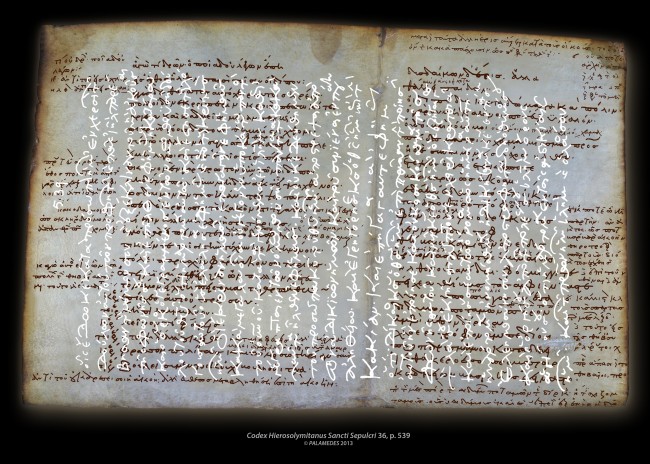
Also, two Egyptology News article grabbed my attention this morning. The first is that a statue of Cleopatra and Marc Antony's children has been discovered. The second is about the recovery of fragments from the Egyptian Book of the Dead. Interestingly enough, both of these "discoveries" were actually found years ago, but scholars didn't realize what they were until recently. It shows that there are still new things to be discovered, even in museum archives.
Monday, April 23, 2012
Tuesday, March 20, 2012
Appetitive: Birthday Poetry
One of my friends who is a superb Latinist is having her birthday coinciding with my next bread lesson. She insists that we not sing her happy birthday so I thought we would all chant a Latin poem together that had something do do with birthdays, like one of the ones from the Sulpicia cycle. Anyone have any good ideas?
Labels:
Appetitive,
Latin Poetry
| Reactions: |
Thursday, March 15, 2012
Reasoning: The Scythians
In reading Herodotus' Histories, I was always intrigued by the mysterious nomadic Scythians. Herodotus views them as fierce warriors and a people with a bizarre and mysterious culture. I am not a historian so the actual people that inspired his descriptions have not been anything more than a vague interest. However, I was excited to see an article in the New York Times about the sophistication of these ancient nomads.
Labels:
Herodotus,
New York Times,
Scythians
| Reactions: |
Sunday, March 4, 2012
Appetitive: A Summery of My Weekend
"κναπτόμενος δ'ἀλὶ δεινᾷ
φεῦ
σκύλλονμαι πρὸς ἀναύδων
ἠέ
παίδων τᾶς ἀμιάντου.
ὀᾶ."
I slightly modified a line that reminded me of the way I feel this weekend. I don't think I altered the meter (although I could be wrong). Although it's pretty obvious, can anyone guess what this is from? I hope the rest of you had a better weekend than I did...
Labels:
Appetitive,
Greek Drama,
Greek Poetry
| Reactions: |
Sunday, February 26, 2012
Appetitive: Greek Vocabulary
I am almost three-quarters of the way through the Lysias for tomorrow...about fifteen OCT pages in, and I am just amazed at how many words the Greeks had for "kill" and "destroy."
And also that "you were robbed of all hope" (lit. will be in the Greek, but only because it is in a particular type of condition) is exactly the same expression in Greek: "πασῶν τῶν ἐλπίδων ἀποστερήσεσθε" (Lysias 12.70).
Have a lovely evening, everyone.
And also that "you were robbed of all hope" (lit. will be in the Greek, but only because it is in a particular type of condition) is exactly the same expression in Greek: "πασῶν τῶν ἐλπίδων ἀποστερήσεσθε" (Lysias 12.70).
Have a lovely evening, everyone.
Friday, February 24, 2012
Spirited/Reasoning: Stagecraft in Aeschylus
Usually when I read Greek drama, I don't consider the actual theatrical performance of the plays. Instead, I think about the language and the themes. The first time the actual staging became important to me was when I was assigned large portions of Oliver Taplin's The Stagecraft of Aeschylus in my Agamemnon class at my alma mater. Taplin explains the importance of the entrances and exits of the characters and the staging.
Recently, in the Garvie commentary which I have been raving about of late, the staging has come to my attention. Garvie explores a lot of the controversial aspects of the staging of the Persians in his introduction. I ended up dealing with this specifically in my presentation today in my Persians class. Taplin (and Garvie citing Taplin) discuss the difference between the two entrances of Atossa. At the first entrance, the chorus greets the queen with a full body prostration and the queen arrives decked out in rich clothing and she presumably arrives in a chariot. In the second entrance, she arrives on foot, possibly dressed in black, and carrying a set of libations. Her change in attire demonstrates the change in fate of the empire.
The presentation went reasonably well, thanks to some help from Propertius II with regards to the meter. Now back to more Lysias (of which I have completed two pages today and am hoping to read two more tonight).
Recently, in the Garvie commentary which I have been raving about of late, the staging has come to my attention. Garvie explores a lot of the controversial aspects of the staging of the Persians in his introduction. I ended up dealing with this specifically in my presentation today in my Persians class. Taplin (and Garvie citing Taplin) discuss the difference between the two entrances of Atossa. At the first entrance, the chorus greets the queen with a full body prostration and the queen arrives decked out in rich clothing and she presumably arrives in a chariot. In the second entrance, she arrives on foot, possibly dressed in black, and carrying a set of libations. Her change in attire demonstrates the change in fate of the empire.
The presentation went reasonably well, thanks to some help from Propertius II with regards to the meter. Now back to more Lysias (of which I have completed two pages today and am hoping to read two more tonight).
Labels:
Aeschylus,
Greek Drama,
Greek Tragedy,
Oliver Taplin,
Reasoning,
Spirited
| Reactions: |
Tuesday, February 21, 2012
Spirited: More Thoughts on Lysias
So my accountability scheme isn't working so well. I have been doing a bit of Lysias each day over the last few days, but I haven't posted it. I will definitely post some more this weekend. I've also been doing a lot of research on Lysias 12 and the Amnesty of 403 for my presentation on Monday. Should be fun.
| Reactions: |
Subscribe to:
Posts (Atom)